WhatsAppnow
Marta Kowalski
Hi! We are just landing now, where do we find the key?
St Helena, VIC
Guests choosing St Helena need more than a pin and a bedroom count. A dedicated direct-booking page can explain the property, the local fit and the booking path in one place, while current OTA listings remain live. St Helena, VIC hosts can use the extra space to connect honest locality context with verified property detail, calm arrival guidance and one clear booking action.
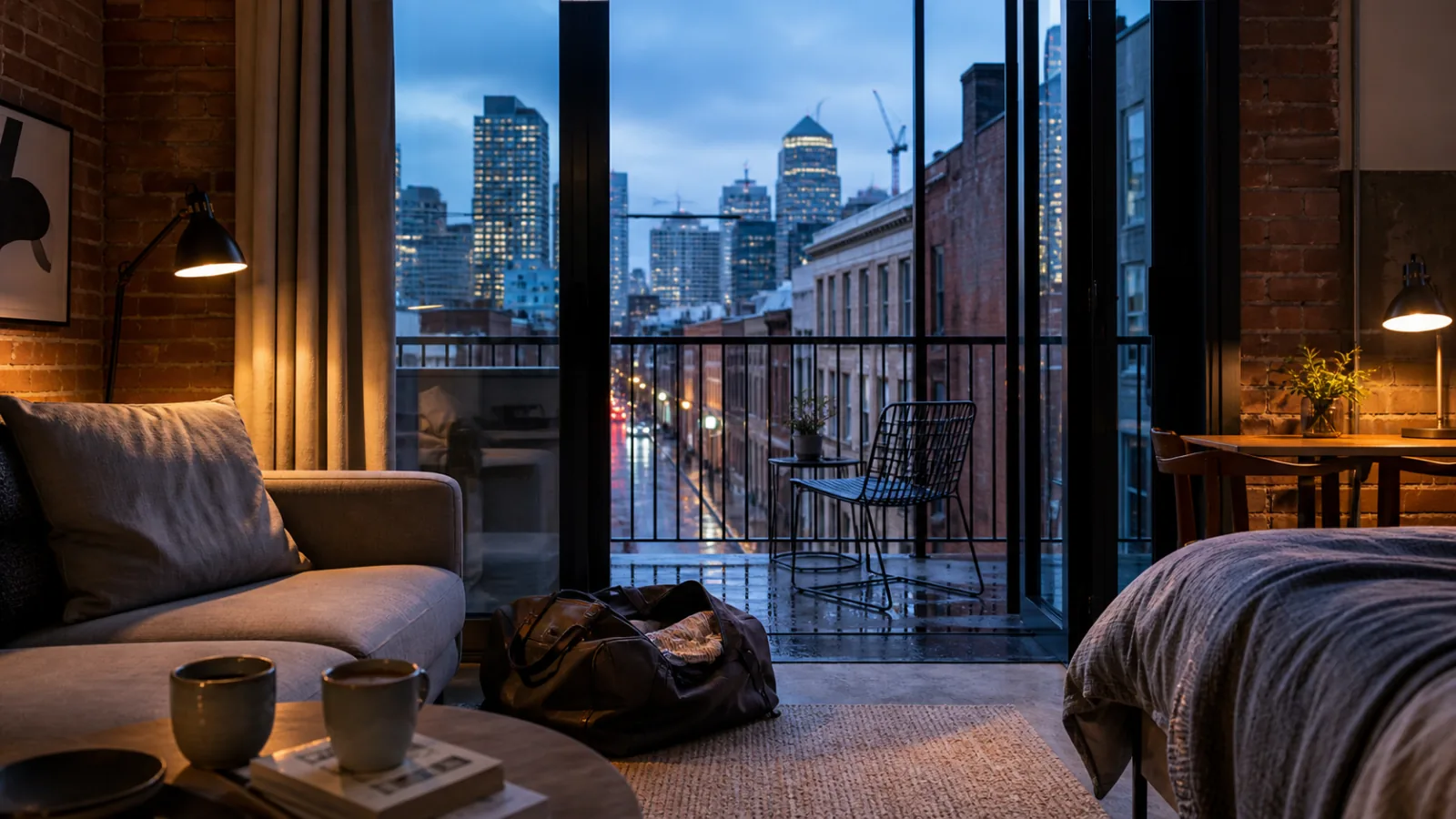
Regional image of Melbourne. Not the property.
Position St Helena within the wider Melbourne accommodation market. The 2021 Census counted 2,890 residents and 1,046 private dwellings in St Helena. Those figures establish the locality's scale without pretending that resident population measures visitor demand. St Helena, VIC reads as a metropolitan suburb. That is a planning description, not an ASGS classification. St Helena, VIC is grouped with the wider Melbourne market for this content rollout. From the official locality points, Greensborough is about 2 km away and Briar Hill about 2 km away. These straight-line comparisons help a guest recognise the surrounding places, but they are not road distances, transfer times or claims that the three localities offer the same stay experience.
For hosts in St Helena, the commercial opportunity is to own the explanation that marketplace cards compress: who the stay suits, how arrival works, what is included and why booking direct is straightforward. Separate houses represent about 83.1% of occupied private dwellings, making whole-home layout, parking, outdoor areas and family or group suitability useful points of difference. St Helena, VIC copy should help a traveller decide whether this particular accommodation suits regional touring and stopovers, family or community visits or practical multi-night stays. Those themes are editorial starting points rather than measured demand. For the first audience, show the rooms, equipment and booking conditions that make the trip workable. For the second, answer ordinary questions about cooking, laundry, parking, work space, children or accessibility when they apply. For the third, explain the length-of-stay fit and any important limitations. The final emphasis should come from the host's booking history, genuine enquiries and current property features. A locality label cannot prove convenience on its own, so every nearby attraction, venue, service and travel-time statement needs address-level checking before it becomes sales copy.
Describe the property as a local base north-east of central Melbourne. Use verified travel times and exact neighbourhood references only when a host supplies them; the distance quoted above is measured in a straight line, not by road. A useful arrival guide for St Helena, VIC starts with the booked address, not the centre of Melbourne. The host should confirm the final road or building entrance, parking limits, luggage path, steps or lifts, lighting and the process for a late check-in. If directions use Greensborough or Briar Hill as a waypoint, check them against current maps and transport information before publication. Access codes and other security details belong in the private pre-arrival message. The public page can still explain stable facts such as whether a car is practical, where a guest meets the host and which mobility constraints apply. The 20 km north-east relationship to the parent market is orientation only and must never be converted into a promised drive time.
Show whether the St Helena stay is a house, apartment, cabin, room or managed collection. Put occupancy, bed layout, parking, outdoor space and accessibility details where a guest can make an informed choice. Explain check-in, building or road access, luggage, parking and late-arrival expectations for the actual address. Link changing transport information to official operators instead of hard-coding promises that may date. Best suited to whole homes, family stays, group-ready houses, cottages and small local portfolios. A St Helena, VIC owner should support that positioning with current photographs and a precise account of property type, occupancy, bed layout, bathroom access, kitchen equipment, climate control, internet, parking, outdoor areas and house rules. Where the source profile discusses local dwelling form, it supplies settlement context only; it does not identify short-stay inventory or forecast bookings. The Census resident and dwelling figures must never be read as visitor demand, seasonal occupancy or evidence that a specific accommodation style will perform. Those commercial decisions belong to current booking records, property-level research and real guest questions. Keeping the description, images, fees and restrictions aligned across the website and every active marketplace also prevents a guest receiving conflicting information.
Use a memorable St Helena page, consistent availability and permission-based follow-up so repeat and referred guests can return to the host without having to rediscover the property through a marketplace. A strong St Helena page should finish with one calm next step: check dates, ask a property-specific question or start a direct enquiry. Keep price, availability, payment and cancellation information consistent with the live booking system. Do not use unsupported savings, ranking or occupancy promises. The aim is a credible owned channel that complements current listings and gives the host control of the guest relationship. For St Helena, VIC, that means leaving useful OTA listings active while adding a host-owned route for guests who are ready to enquire, return or follow a referral. Availability, minimum stays, prices, mandatory charges, payment timing and cancellation terms should be synchronised across all channels. The direct page can provide more room for arrival instructions, verified local guidance and permission-based follow-up, but it should not promise a discount, ranking, occupancy level or booking outcome that the host cannot substantiate. New travellers remain free to book through the marketplace they trust, while repeat guests gain a memorable way to find the property again.
Of 1,006 occupied private dwellings in St Helena, VIC, 83.1% are separate houses, 12.6% townhouses and 3.2% flats or apartments.
Housing in St Helena, VIC runs large: four-bedroom homes are the single commonest size at 41.4% of occupied private dwellings, and 85.4% have three bedrooms or more. The 2021 count recorded 101 one-bedroom, 33 two-bedroom, 361 three-bedroom and 416 four-bedroom dwellings, plus 82 with five bedrooms or more. That puts St Helena, VIC close to the Melbourne area median of 77.4% for three-bedroom-plus stock.
St Helena, VIC is a two-car locality: 70.7% of occupied dwellings kept two or more motor vehicles in 2021. The split was 250 dwellings with one vehicle, 432 with two and 272 with three or more. Only 4% recorded no motor vehicle.
52.8% of work journeys from St Helena, VIC were made by car on Census day. 0.3% walked or cycled. 28.2% worked from home, which is a fair proxy for whether the internet here is good enough to sell a stay on.
The commonest household in St Helena, VIC is two-person, at 31.4% of households. 19.4% live alone and 31.1% of households hold four people or more. Across 812 families, 52.7% were couples with children, 36.1% couples without and 10.1% one-parent families.
The median age in St Helena, VIC was 46 at the 2021 Census, older than the Melbourne area median of 38. Households averaged 2.7 people and 0.8 persons per bedroom. Median rent was $163 a week, well below the $400 median across the Melbourne localities DirectStay covers. Median mortgage repayments were $2,167 a month. Median household income ran to $2,256 a week, against $925 for an individual.
Tenure in St Helena, VIC split 41.2% owned outright, 41.1% mortgaged and 12.9% rented in 2021. That is 130 rented dwellings in the locality count.
Every figure above describes the resident population of St Helena, VIC at the 2021 Census. None of it describes visitors, nightly rates, occupancy or short-stay supply, and it must not be presented as if it did. Its use is to set expectations a host can then confirm from the property itself: the real bedroom count and bed layout, how many vehicles the space genuinely takes and whether that space is on-title or on-street, the actual route to the door, and the house rules a street of this kind will expect around noise and turnover.
Sources: ABS 2021 Census locality evidence (SAL22339) and ABS ASGS Edition 3 locality geography and ABS 2021 Census DataPacks, Suburbs and Localities tables G02 medians and averages, G29 family composition, G34 motor vehicles, G35 household composition, G36 dwelling structure, G37 tenure, G41 bedrooms and G62 travel to work. Census figures provide locality context only and do not measure short-stay demand.
For St Helena, VIC, show the actual rooms, occupancy, amenities, access and limitations that support regional touring and stopovers; avoid assumptions based on the locality alone.
Check the final approach to the property, then explain parking, luggage, entry and late arrival without presenting the Melbourne parent distance as travel time.
Keep OTA discovery working, align the live booking facts, and give returning or referred St Helena, VIC guests a host-owned path alongside those listings.
The guest CRM
Keep arrival questions, booking changes and follow-up messages for every stay in one thread, across the channels guests already use.
The Direct Stay guest inbox. Four conversations that arrived on WhatsApp, Telegram, iMessage and email sit in one list, and Marta Kowalski's WhatsApp thread is open beside it with a reply written in the composer.
Start with what you need now. Add more properties and tools when you are ready.
For 1–2 properties. Film, direct-booking site, Google profile and the core booking setup.
Start with LaunchFor 3–8 properties. Add multi-property discovery, guest messaging and ongoing visibility.
Talk about ScaleFor large property groups. Manage direct bookings across several regions in one place.
See portfolio plansLocal decisions a useful booking page should make easier.
Yes when the business genuinely operates in St Helena and can add property-specific proof. The page should explain the actual neighbourhood, arrival and guest fit, not duplicate a parent-market page with the place name changed.
Yes, as the nearest established DirectStay market and image source. Treat that as an image and internal-link relationship; all geographic wording must match the real relationship between St Helena and Melbourne.
Use the actual property address to verify the final approach, parking, public transport, entrance and check-in arrangements. Greensborough and Briar Hill provide surrounding context, while the Melbourne distance is a straight-line measure rather than a road or journey-time promise.
No. Keep effective marketplace listings live and their calendars, prices and conditions aligned. The owned page adds a richer explanation and a direct route for enquiries, regional touring and stopovers, repeat visitors and referrals; it does not require guests to abandon a booking channel they prefer.
Explore this local area.
View the Melbourne guideKeep current OTA listings live.
Hey. What are you trying to sort out?