WhatsAppnow
Marta Kowalski
Hi! We are just landing now, where do we find the key?
Byron Bay, NSW
Byron Bay bookings are shaped by more than a famous postcode. Guests compare town access, a particular beach, festival movement, a quiet hinterland base and the drive from regional airports. A direct site should replace vague barefoot language with the details that make one stay genuinely fit the trip.
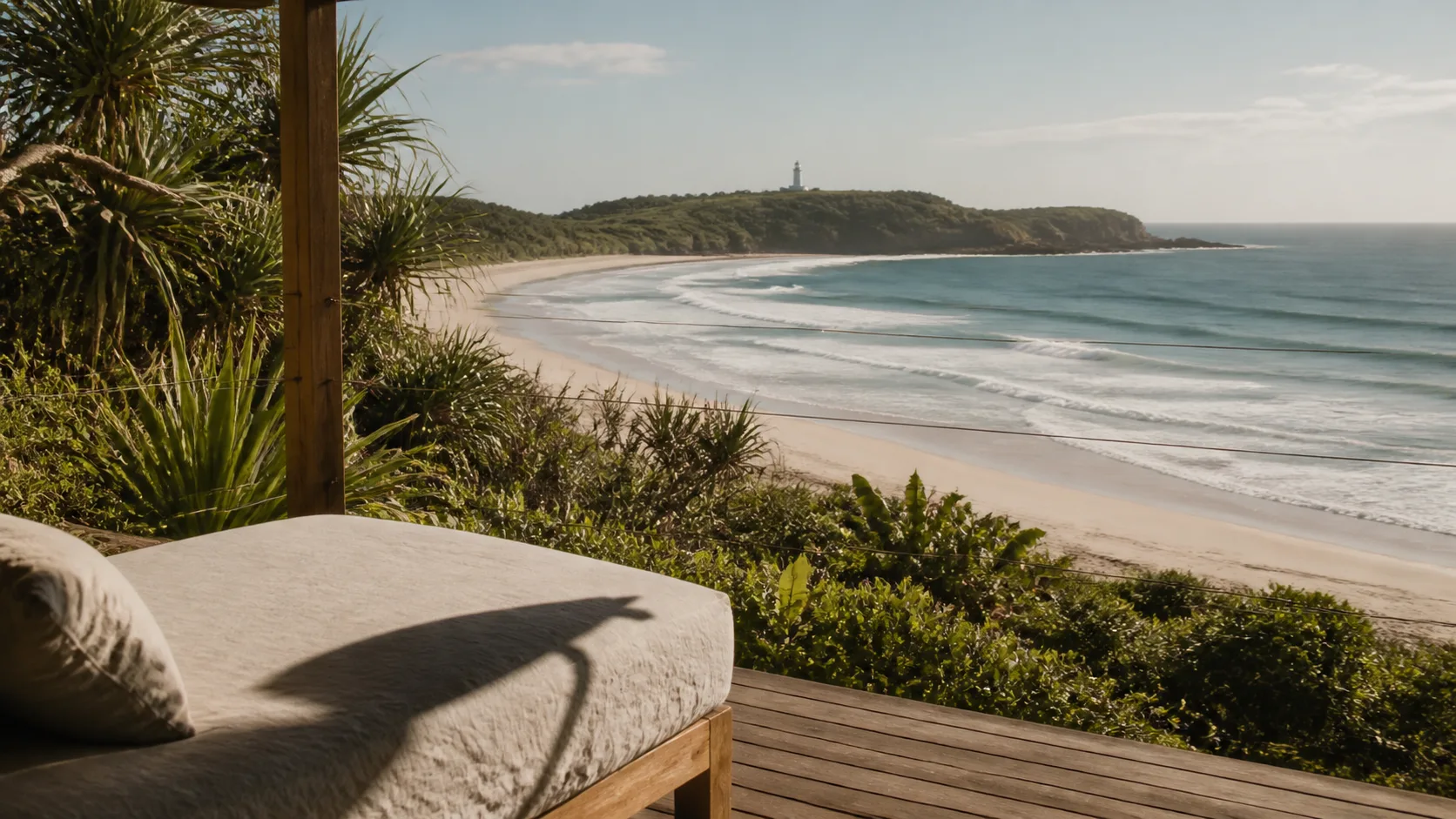
Main Beach, Clarkes, Wategos, Belongil and the wider coast do not produce the same stay. Neither does a hinterland property outside town. Guests need to understand whether they can walk to meals and the beach, whether a car is useful, and whether the quiet setting they want adds a planned drive to town. A direct page should explain that trade-off honestly instead of applying the same surf-and-sun copy to every address.
Arrival is another important split. Visitors may drive from Brisbane or Sydney, fly through Ballina Byron Gateway Airport or continue along the Northern Rivers. The page can describe transfer choices, parking, late arrival and luggage without locking in fragile time estimates. Around festivals and busy weekends, check-in and movement deserve their own current, reviewable content rather than a permanent claim that everything is close.
Longer stays may be looking for laundry, shade, workspace, family layout and a routine beyond the beach. Hinterland day trips, markets and coastal walks can support a richer stay, but the property should still be positioned around what it actually provides. Clear boundaries attract a better-fit guest and reduce repetitive pre-booking questions.
Explain the relationship to town, the coast and surrounding villages without stretching the Byron Bay label. The best page helps a guest understand the quiet-versus-convenience trade-off.
For events and peak periods, surface parking, transfers, check-in and the return to the property. Keep dates and transport details easy to review, and never imply an event partnership that does not exist.
Show laundry, cooking, shade, workspace, storage and local routine. These details position a house or apartment for families and longer stays without inventing performance claims.
The guest CRM
The website wins the booking. The shared Direct Stay system then keeps guest questions, stay details and replies together without asking the guest to change apps.
The interface below is an illustrative product demonstration. Names, conversations, stays and amounts are sample data, not customers or results.
The Direct Stay guest inbox. Four conversations that arrived on WhatsApp, Telegram, iMessage and email sit in one list, and Marta Kowalski's WhatsApp thread is open beside it with a reply written in the composer.
Start with what you need now. Add more properties and tools when you are ready.
For 1–2 properties. Film, direct-booking site, Google profile and the core booking setup.
Start with LaunchFor 3–8 properties. Add multi-property discovery, guest messaging and ongoing visibility.
Talk about ScaleFor large property groups. Manage direct bookings across several regions in one place.
See portfolio plansLocal decisions a useful booking page should make easier.
Use the wider Byron region only with clear locality detail. Lead with the actual town or rural area and explain the drive to Byron Bay. A guest who wants quiet acreage may welcome that separation; a guest expecting to walk to Main Beach should never discover it after booking.
Yes, where the property has a genuine relationship to that beach. Explain the real route, terrain, parking or walking context and distinguish beach access from an ocean view. Current patrol and condition information should remain with official beach-safety sources.
Create a dated, maintainable page for the event period, covering occupancy, arrival and transport choices without suggesting official affiliation. Remove or update stale details after the event. The evergreen property page should not depend on one festival to remain useful.
Guests need more than holiday imagery. Show practical cooking, laundry, shade, Wi-Fi and workspace facts, grocery context and how the location feels on an ordinary day. Those details can make the direct site valuable for families, remote work and slower regional trips.
Open a locality guide for more specific direct-booking context. The full list is grouped alphabetically for faster scanning.
Explore another local guide.
Browse all locationsKeep every current listing live.
Hey. What are you trying to sort out?